
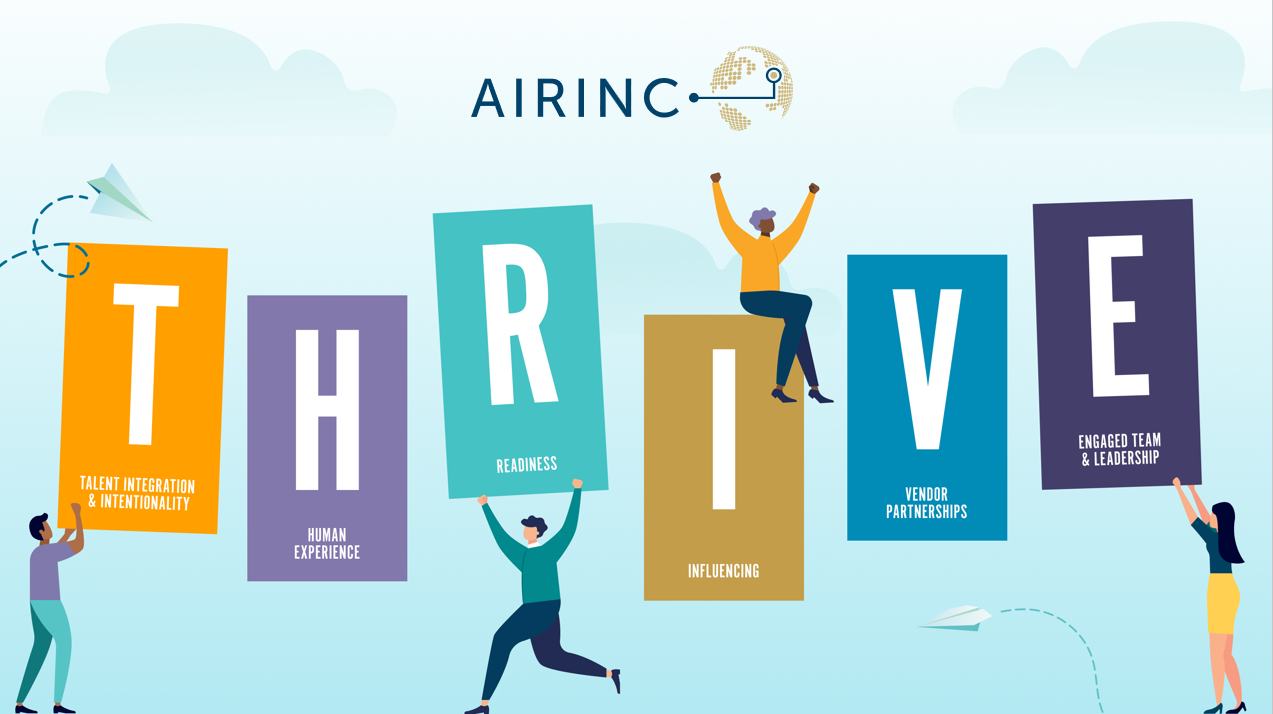
Frameworks are incredibly useful for organising thinking, identifying gaps and giving us a common language. They’re great! The problem comes when that beautifully logical PowerPoint slide meets the considerably messier reality of an actual Global Mobility programme!
So, when we ran our THRIVE webinar series, I was particularly interested in what happens when the theory meets the real world.
I spoke with mobility leaders from leading global companies. They were different organisations in different industries and with very different mobility programmes.
And, reassuringly, nobody told us they had everything figured out.
What did emerge, however, were some surprisingly consistent habits which I’d like to share with you. And, as you’re reading this, hopefully with a cup of coffee in hand, it’s worth noting that I specifically chose the word habits. It’s important.
Build relationships when you don’t need anything
This sounds obvious. It is also surprisingly easy not to do it!
When things get busy, relationship-building can feel like something to be put aside for a while. Something to do when there is time. Then suddenly you need Finance to approve something unusual, Procurement to think differently about a vendor, or an HRBP to involve Mobility earlier in a business decision.
That is not the ideal moment to introduce yourself!
The strongest programmes invest in those relationships continuously. They understand what their stakeholders care about, how they operate, the way they like to receive information and where Mobility can make their lives easier.
Asking for someone’s support is probably not the best day to start building the relationship.
Ask “why?” before rushing to “how?”
Mobility people are excellent problem solvers.
Tell us someone needs to move to Singapore and we are immediately thinking about policy, immigration, tax, payroll, benefits, cost estimates…
But perhaps the first question should be: why are we moving them?
What is the business trying to achieve? What should the employee learn? What happens when they return? Is an assignment even the best solution?
Making it a habit to ask why moves Mobility from processing a decision to helping shape one.
Use technology to create time – then do something useful with it!
Technology came up in almost every conversation, which isn’t a big surprise.
What was more refreshing was that nobody seemed particularly interested in technology for technology’s sake.
Automation can remove administration. AI can identify patterns. Dashboards can make information instantly accessible.
The interesting question is what happens to the time technology gives back.
If automation removes three hours of administration, do we simply process more transactions? Or does somebody reinvest that capacity in work that humans are rather good at: analysing trends, talking to the business, improving the employee journey or solving a problem before it becomes one?
The thriving programmes we heard from were interested in technology because of the capacity it creates for people to do more valuable work.
Don’t just show people the data. Tell them why they should care.
Dashboards are all the rage, but having a dashboard is not the same as having insight. You can have beautiful charts showing assignment numbers, costs, demographics and destinations. But eventually somebody senior is going to ask: “So what?”
Thriving teams are increasingly good at answering that question.
They connect mobility data to the things the organisation already cares about: talent, retention, succession, diversity, workforce planning and cost.
The data is useful. The story inside the data is much more useful.
They design for confidence
One of my favourite insights from the series was that a good employee experience is not necessarily about giving people more. We often assume improving employee experience means adding things: more communication, more guidance, more choice, more support.
But our corporate leaders highlighted something rather different. Employees can have too much information.
Sometimes the better question is: does the employee know what happens next?
Thriving programmes think about timing, clarity and proactive contact. They try to remove uncertainty rather than simply adding communication.
So perhaps the question isn’t “Have we told them everything?”. It is: “Do they know what they need to know right now?”
Finally, get the boring stuff right
Possibly not the most exciting conclusion for a blog post, but an important one. You cannot be ready for the unexpected if the everyday isn’t working properly.
Thriving programmes build reliable processes. They clarify responsibilities. They develop their people and give them genuine ownership. And they involve vendors in solving problems rather than simply asking them to complete tasks.
None of this is especially glamorous. And maybe that is what I found most interesting...
Across six conversations, there wasn’t one magic technology, policy or operating model that separated a thriving programme from everyone else.
Instead, there were habits.
Build relationships before you need them. Understand the purpose before starting the process. Use technology to create capacity. Turn data into a story. Reduce employee uncertainty. Develop your people. Make everyday operations dependable. Treat partners like partners.
Individually, none of these is revolutionary. However, if you do them consistently, something rather more significant starts to happen. Your programme starts to THRIVE.

Want to explore what this looks like in practice? AIRINC’s THRIVE framework asks how Mobility teams can move beyond operational excellence. Our webinar series explored that question with corporate mobility leaders, and we’ve brought those lessons together in THRIVE in Practice. Download it for more on the ideas and everyday habits behind thriving mobility programmes.