.png)
In mobility, we often talk about moving people — but behind every move is a person, a family, and a life in transition. Too often, programs focus on logistics, compliance, and cost efficiency while overlooking the emotional, personal, and relational impact of relocation.
Beyond Moves and Metrics
At AIRINC, we believe that a thriving mobility program starts with a deep commitment to the human experience — the “H” in our THRIVE framework. Because when employees and their families feel seen, supported, and understood, assignments don’t just succeed — they create loyalty, engagement, and lasting impact.
The Emotional Dimension of Mobility
Global mobility moves more than jobs — it moves lives. An international assignment can be one of the most exciting and challenging chapters in a person’s career. It’s a test of resilience, adaptability, and family unity.
Programs that recognise this go beyond standard HR transactions. They see the whole person: the professional, the parent, the partner, and the community member. They consider what it feels like to land in a new country, find a home, enrol children in a new school, and rebuild routines from the ground up.
When mobility leaders design policies that walk in the shoes of the assignee, they help employees not just survive the move — but thrive through it.
Why Empathy is the New Core Competency
As AI and automation handle more of the transactional workload, the skills that set mobility professionals apart are increasingly human — empathy, curiosity, and emotional intelligence.
Empathy isn’t a soft skill — it’s a strategic one. It helps mobility teams anticipate challenges before they escalate, communicate with clarity, and build trust across borders and business lines.
Simple actions make a difference: pausing before responding, asking open-ended questions like “What part of this move feels hardest right now?”, or taking time to understand a family’s priorities. These moments of empathy shape the overall assignment experience and, ultimately, influence retention and engagement outcomes.
Designing Programs That Feel Human
A truly human-centred mobility program integrates empathy into its design principles. It’s reflected in how policies are communicated, how partners deliver services, and how support is tailored.
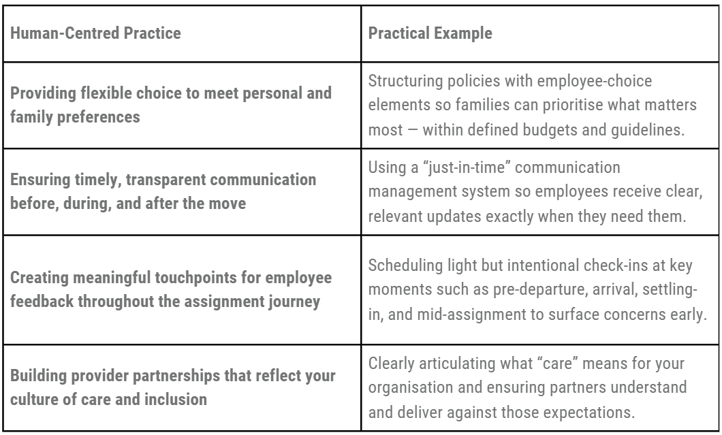
When companies invest in understanding the emotional journey as much as the logistical one, they build mobility programs that people trust — and remember.
A Human Approach Builds Better Outcomes
Programs designed around the human experience drive measurable impact. Employees who feel supported are more engaged, adapt faster, and perform better. They also become stronger ambassadors for global careers, encouraging others to embrace mobility as an opportunity for growth, not disruption.
A human approach isn’t about adding more benefits — it’s about designing with empathy, not around it. It’s a mindset shift that transforms mobility from a process into a people experience.
The Takeaway
As global mobility evolves, the most successful programs will be those that remember this simple truth: mobility is personal. Behind every relocation package is a person making a life-changing decision. When we honour that, we move beyond transactions and start building connections that truly last.
Let’s put the “H” back in global mobility — by leading with empathy, designing for experience, and shaping assignments that move both careers and lives forward.