
Names matter. Even more so when they need to communicate what an offering does and how it is different.
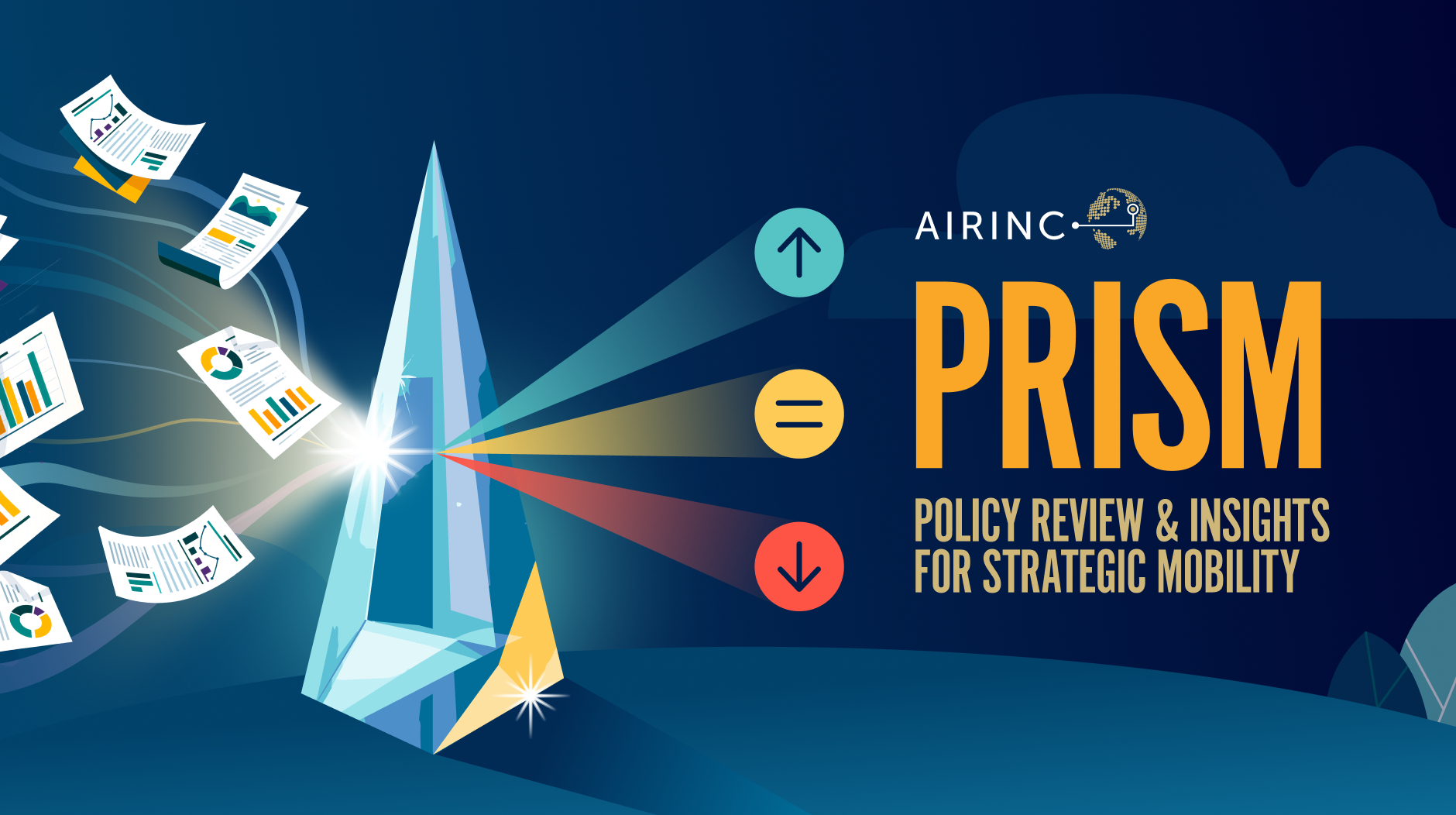
We named AIRINC’s policy review offering PRISM, which stands for Policy Review and Insight for Strategic Mobility. The name reflects both the mechanics of the offering and the perspective it gives mobility teams.
A prism takes something that may initially appear singular and reveals the distinct elements within it. When light passes through a prism, it separates into a spectrum, making visible the colors that were there all along; Mobility policies are similarly multifaceted.
It is easy to evaluate a policy one provision at a time: Is the housing approach competitive? How many temporary living days does the market provide? Is a particular allowance above or below the benchmark? Those comparisons are valuable, but they do not necessarily explain how the policy performs as a whole.
A strong provision in one area may not compensate for an unintended gap elsewhere. A policy can be generous without being strategically aligned. Likewise, a provision that falls below market may represent a deliberate and reasonable trade-off when viewed alongside the organization’s broader investment choices.
PRISM brings those individual elements into focus.
The name’s full meaning—Policy Review and Insight for Strategic Mobility—captures the progression at the heart of the offering:
-
Policy Review reflects the structured, comprehensive evaluation of the mobility policy and its individual provisions.
-
Insight represents the interpretation that turns benchmark data and scoring into a meaningful story about the policy’s strengths, pressure points, and trade-offs.
-
Strategic Mobility keeps the analysis connected to the larger goal: ensuring mobility investment supports the organization’s talent priorities, employee experience, business needs, and program objectives.
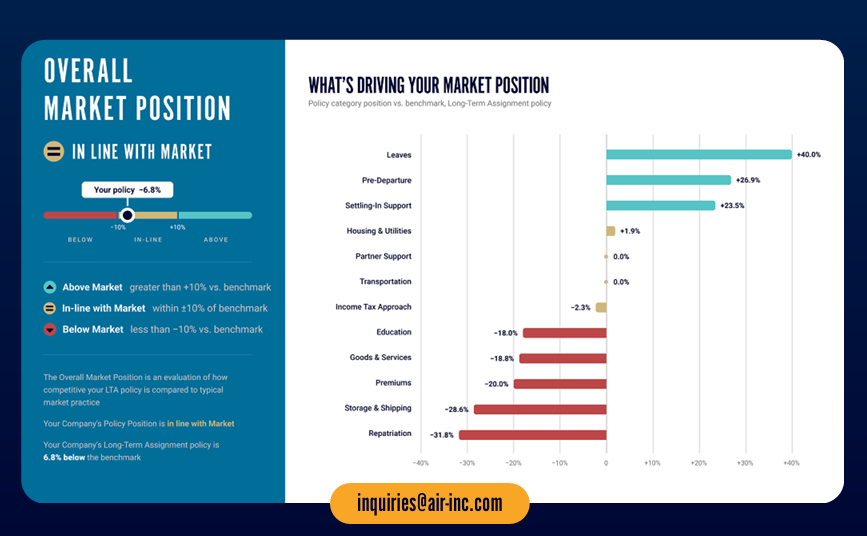
Using AIRINC’s benchmark intelligence, a weighted scoring methodology, and expert analysis, PRISM provides an objective view of overall policy competitiveness. It shows how provisions work together, identifies which elements have the greatest influence on the policy’s position, and highlights where an organization may be over- or under-investing.
The result is more than a score. It is a clearer view of where the policy is working well, where trade-offs may be creating unintended gaps, and where targeted changes could make the greatest difference.
That is why we decided on PRISM: it captures our goal of helping mobility teams see what is already there through a different lens, revealing the full spectrum of their policy and providing the clarity needed to act with purpose.