

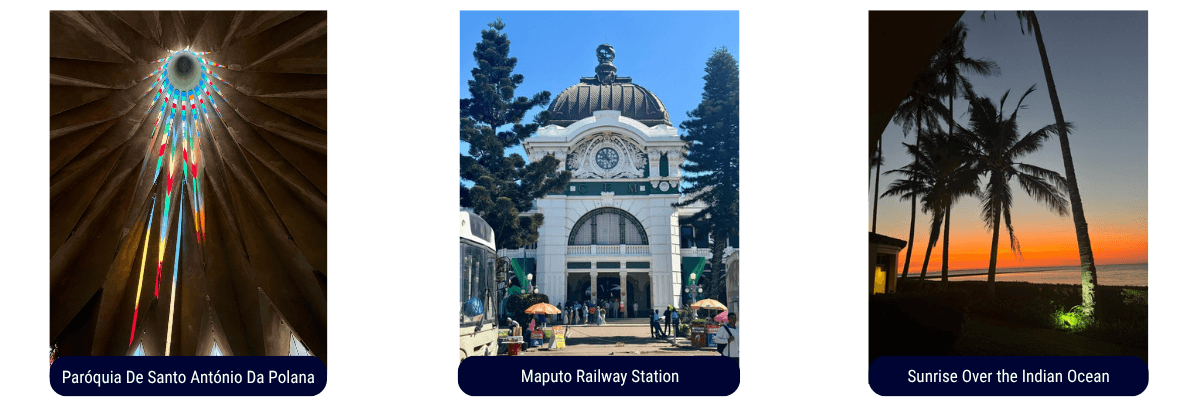
Some of my favourite moments during my recent cost-of-living survey in Maputo came before the working day began. Staying by the coast, I woke to the sound of waves and watched the sunrise over the sea. It was a peaceful start to busy days spent visiting outlets, collecting prices, and getting to know Mozambique’s capital.
Living in Maputo: Coastal Life and Expat Neighbourhoods
There is plenty to discover, from historic buildings and busy markets to music and food. Portuguese colonial buildings and Art Deco architecture sit alongside newer developments, adding to the appeal of the coastal setting.
Researching onsite offers a chance to observe neighbourhoods, explore shopping options, and meet people who know the city well. In Maputo, a long-standing local contact made this experience particularly memorable.
What is everyday life like for international assignees in Maputo? Maputo offers coastal living, established expatriate neighbourhoods such as Sommerschield and Polana, and shopping options including Baía Mall. AIRINC’s onsite cost-of-living research explores these everyday environments alongside collecting local prices, helping provide context for international assignments.
Where Do Expatriates Live in Maputo?
Much of my survey took me through Sommerschield and Polana, two of the city’s expatriate residential areas. The neighbourhoods felt quiet and orderly, leaving me with a pleasant impression.
Some streets were being renovated, giving parts of the city a fresh look. Several high-rise apartment buildings were also under construction, bringing visible changes to the residential landscape.
Seeing these neighbourhoods helps put housing into context. For assignees, choosing a home involves considering access to workplaces, schools, and shopping, alongside security, the surrounding environment, and amenities. These factors help determine which location best suits each household’s needs and lifestyle.
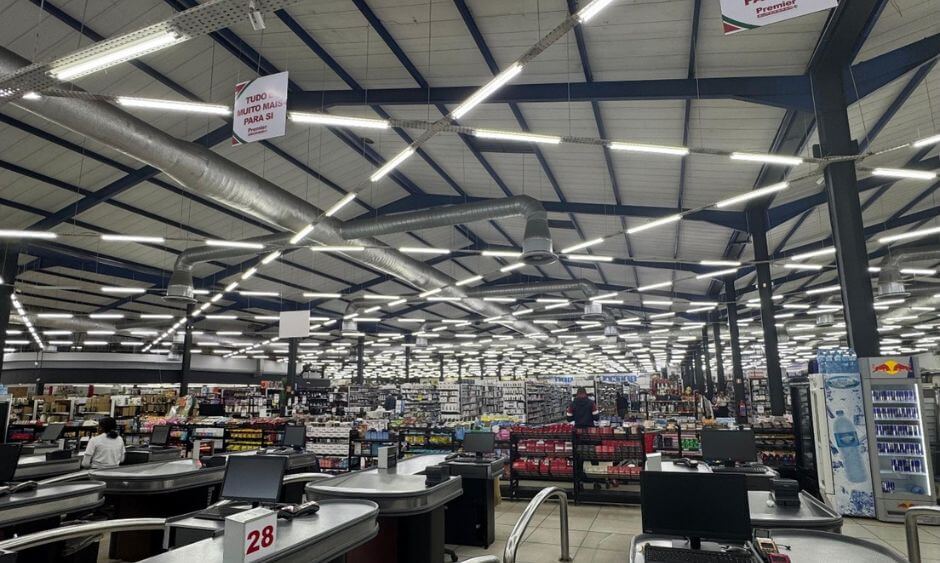
Shopping in Maputo: Everyday Convenience at Baía Mall
For international assignees in Maputo, shopping centres such as Baía Mall provide access to groceries, household essentials, restaurants, and other everyday services in one location.
Baía Mall was an important survey stop, where I visited grocery stores and restaurants to collect prices and observe availability for assignees. The range of retailers offered a clear overview of available shopping options.
Woolworths, Premier SuperSPAR, and Game offer groceries and household necessities. Having several options together can make arriving assignees’ first shopping trips easier. Shopping also offers newcomers a chance to practise Portuguese, Mozambique’s official language. A few expressions can help when asking for an item or checking a price, and “bom dia” (good morning) is a friendly way to start.
Dining choices included Japanese, Indian, and Turkish food, alongside pizza and steaks. Clothing, pharmacies, electronics, furniture stores, and other retailers made it possible to combine several errands in a single visit of Baía Mall.
Outside the mall, local food offers plenty to explore, particularly fish and prawns. Coconut, peanuts and piri-piri chilli are staples of Mozambican cooking. Markets are a good place to discover both local dishes and everyday life — I visited FEIMA, Maputo’s lively craft-and-food market, which combines traditional handicrafts with stalls full of the city’s characteristic flavours.
Twenty Years of Local Knowledge
Local knowledge is valuable to AIRINC’s onsite cost-of-living research, helping researchers navigate survey locations and better understand the cities they visit.
Florencio Muianga, a local driver who has supported AIRINC researchers for 20 years, helped me navigate Maputo. I was the 17th researcher he had hosted, which created a lovely connection to colleagues who had surveyed Maputo before me. Florencio knew most survey locations and understood what we needed to do. There was little need to explain our work, and certainly no need for Google Maps! His familiarity helped the survey run efficiently.
Our journeys also came with stories. Florencio told me about his brief acting experience in the film “Blood Diamond,” appearing as a taxi driver near Maputo’s beautiful railway station. The station is a city landmark, with a museum exploring Mozambique’s railway history. His story gave it an extra personal connection. I truly appreciated his help and the opportunity to continue a relationship supporting our research for two decades.

Memories of Maputo
Looking back, I remember the shops, the neighbourhoods, Florencio’s stories, and the sunrise outside my hotel. Collecting current prices is central to our surveys. Spending time in a location also helps us understand the everyday setting in which purchases are made. Maputo gave me an enjoyable opportunity to do both—and I would be happy to return.

For more stories from our researchers, subscribe to our blog.