

Across South Asia, Mumbai, Karachi, and Dhaka stand out as economic powerhouses, primary landing pads for expatriate talent, and megacities defined by extreme population density. Each serve as the financial center of its respective nation, and each has developed an expatriate rental market that behaves in remarkably similar ways: hyper-segmented into elite, secure enclaves that decouple premium rental tiers from the rest of the domestic economy.
Expatriate Rental Market Trends in Mumbai, Karachi, and Dhaka
In my role on AIRINC’s research team, I help gather and analyze cost-of-living data and housing insights from markets around the world. This perspective helps shape blogs like this one, which look beyond headline rental trends to understand what expatriates may experience on the ground.
The key pattern across all three cities is rental-market polarization. Standard expatriate housing remains concentrated in established corporate and diplomatic districts, while premium properties with newer finishes, stronger security, better amenities, or landmark views are pulling further ahead in price and demand.
Interestingly, the gap between standard expatriate housing and high-end luxury housing continues to widen, creating a polarizing spread between the expatriate baseline and the fast-rising ceiling of premium housing. Let us explore each city’s expatriate housing market and see where these Dickensian dualities lie.
Mumbai expatriate housing: infrastructure and luxury towers reset expectations
Located on the west coast of India, Mumbai’s rental market faces upward pressure from adjustments to ultra-luxury housing standards and major connectivity upgrades. Premium price benchmarks are being reset along the newly delivered Coastal Road and underground metro line. Landmark vertical towers recently constructed in Worli, such as Three Sixty West and Lodha World Towers, are commanding the absolute ceiling of rents, with pristine views across the Arabian Sea. These developments have reset price benchmarks for premium housing across the city, with rents in Central Mumbai neighborhoods rising accordingly.
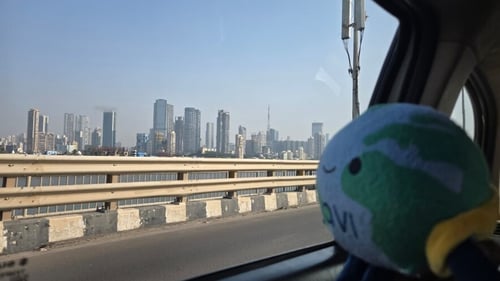
Navi watching the Mumbai Skyline from the Coastal Road
Corporate housing is primarily located in areas such as Lower Parel and BKC due to proximity to work and international schools that cater to expatriates, including the Lycée Français International de Mumbai, Deutsche Schule Bombay, and the American School of Bombay. The Japanese expatriate community also prefers to stay in Powai, where many offices and the Japanese School are located within the same neighborhood. Some younger corporate expatriates also like to stay in Bandra, Juhu, and Khar due to their vibrant social scenes and relatively low-rise coastal charm. Expatriate diplomatic personnel may also choose Cuffe Parade in South Mumbai due to its proximity to several missions and consulates clustered within the area.
Karachi expatriate housing: secure coastal enclaves shape the premium market
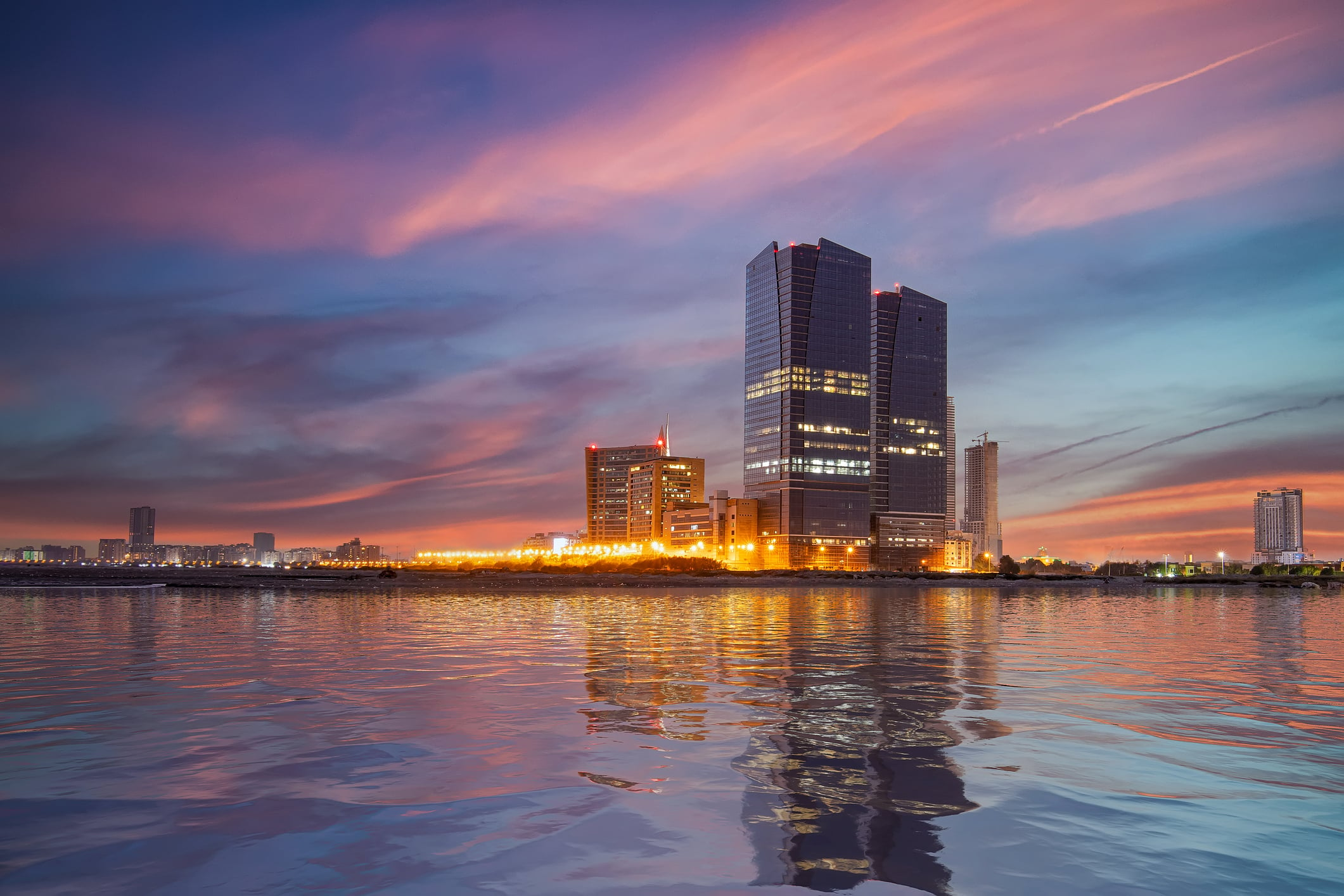
Positioned along the edge of the Arabian Sea on the southern coast of Pakistan, Karachi similarly leverages its coastal identity to define its high-end rental market. The recent development of vertical luxury towers in Emaar Crescent Bay within the Defence Housing Authority (DHA) neighborhood offers panoramic ocean views and condominium-style residences that have reset premium market benchmarks in the city. Additional towers are expected to be developed in the second half of 2026 and may command even higher rents than current properties. The blog header image shows Emaar Crescent Bay, illustrating the type of coastal, high-rise development that is increasingly defining Karachi’s upper-tier expatriate housing market.
In Karachi, both affluent and expatriate housing are concentrated in highly segmented, secure neighborhoods that function as cosmopolitan ecosystems. Demand and supply are mainly based in Clifton and DHA, which attract both returning diaspora and international professionals with apartment complexes and standalone houses in secure neighborhoods. Clifton also acts as both the diplomatic and commercial anchor of the city, with consulates and major MNC offices in close proximity to elite international schools in neighboring blocks, such as the International School of Karachi, The Lyceum, and the British International School Karachi.
Dhaka expatriate housing: diplomatic corridors and amenity upgrades widen the gap
Moving away from open coastlines and into the inland river port of Dhaka, the high-end rental market works a bit differently. The interconnected neighborhoods of Gulshan, Banani, and Baridhara serve as the primary anchors for expatriate living, hosting many diplomatic enclaves and international organization headquarters. These districts are highly favored for their elevated urban security, premium housing stock, and established commercial ecosystems of supermarkets and restaurants tailored to international tastes. Consequently, baseline rents across this corridor are heavily insulated and continuously driven upward by concentrated demand from global macroeconomic institutions and diplomatic missions. International schools such as the American International School Dhaka and the French International School of Dhaka are located within Baridhara, while the International School Dhaka is located in the Bashundhara residential area.
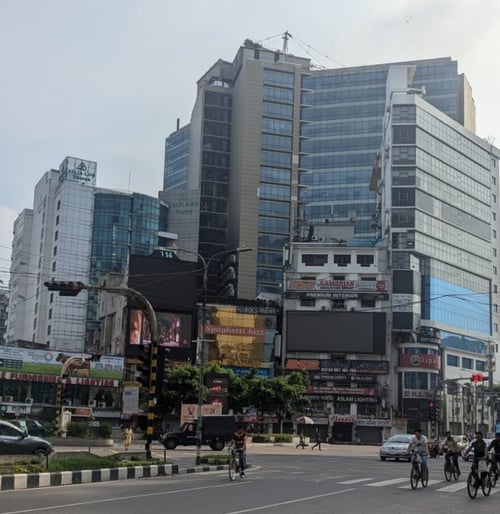 Gulshan Circle II, Dhaka (June 2024)
A key trend in Dhaka’s rental market is the sharp polarization emerging in rental values. A distinct premium is placed on properties transitioning between leases. Landlords may retrofit vacant units with modern finishes and top-tier amenities, driving a steep wedge into local pricing. On the exact same street in Gulshan, a standard three-bedroom corporate apartment may command one level of rent, while a neighboring unit of identical square footage outfitted with premium facilities can command a significantly higher price. This trend has created both increases and decreases across different segments within these prime areas.
Mobility takeaway: expatriate housing budgets need neighborhood-level context
In Mumbai, Karachi, and Dhaka, expatriate housing budgets should be reviewed with close attention to neighborhood, security, amenities, school access, and property condition. The growing gap between standard expatriate housing and premium housing means that a single city-level rental assumption may not fully capture what international assignees experience on the ground.
What mobility teams should know about South Asia expatriate rental markets
These three cities reveal how the high-end expatriate rental market can decouple itself from local economic gravity, creating self-contained, cosmopolitan ecosystems that stand apart from the broader housing market. With aggressive infrastructure upgrades and top-tier amenities, the pricing gap between standard expatriate housing and high-end luxury housing continues to widen, establishing highly segmented real estate environments. Whether it is a luxury oasis overlooking the Arabian Sea or a fortified block nestled within a diplomatic enclave, the baseline for international assignees is continuously being redefined in this tale of three cities.
Frequently Asked Questions
What do Mumbai, Karachi, and Dhaka have in common for expatriate housing?
Mumbai, Karachi, and Dhaka each have highly segmented expatriate rental markets. Premium housing is concentrated in secure, well-serviced neighborhoods close to business districts, international schools, diplomatic missions, and expatriate amenities.
Why are premium expatriate rents rising in these cities?
Premium rents are being driven by a combination of limited high-quality supply, demand from international assignees and returning diaspora, security considerations, infrastructure upgrades, and growing expectations for modern amenities.
Which neighborhoods are most relevant for expatriates in Mumbai, Karachi, and Dhaka?
In Mumbai, common expatriate areas include Lower Parel, BKC, Powai, Bandra, Juhu, Khar, and Cuffe Parade. In Karachi, expatriate demand is concentrated in Clifton and DHA. In Dhaka, Gulshan, Banani, Baridhara, and Bashundhara are key areas for expatriate housing.
What is the main takeaway for mobility teams?
Mobility teams should not assume that average local rental trends reflect expatriate housing costs. In these cities, the upper tier of the market can move differently from the broader domestic rental market, especially where security, schools, amenities, and corporate proximity shape demand.
Many thanks to:
Reynold Varghese and Ankit Mishra from IKAN Talent Mobility
Saifa Shaikh an Independent High-End & Expatriate Real Estate Broker in Mumbai
Huzefa Motani from Arham Landmarks Karachi
Mahbubun Nabi from CBA Housing Dhaka

%20(1).png)
%20(21).jpg)
%20(1).png)