
Early in December, we ran another fantastic Singapore roundtable with our ever-engaged group of participants. As this was our final roundtable of the year, we kicked things off with a fun video of NAVI and his travels—he’s racked up more Air Miles than our entire APAC team!
Beyond the laughs, the highlight for me was the honest conversations, shared learning, and deep, practical insights into what’s really happening inside mobility programs across Singapore and APAC today.
There were countless discussions and I always enjoy listening to them, but one standout theme for me was how Mobility continues to evolve. From teams leading transitions away from long-standing policy frameworks, to placing employee experience at the heart of programs, and even exploring new technologies to enhance processes—Mobility is truly on the move! From long-standing policy frameworks to emerging technology, the discussion reflected both the challenges mobility teams continue to face and the thoughtful ways they are responding.
Before I go into details of what we had discussed, I would like to say A HUGE THANK YOU to all our participants who make our roundtables interesting and never dull!
Here's what we discussed: Starting with a Transformation Story
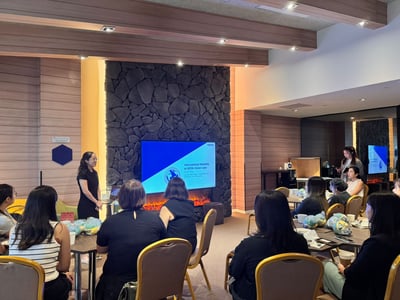 We began the session by inviting a corporate client to share their global mobility transformation journey. Their story resonated with many in the room. Over the past years, they have been working to move from a 33-year-old, Japanese-centric mobility policy to a more strategic, globally aligned program that better supports business needs while improving cost transparency and consistency.
Rather than focusing only on the end result, the discussion centered on how they got there. Policy benchmarking played an important role in validating the new framework against market data and peer practices. Just as critical was early engagement with key stakeholders, including business leaders and regional HR teams, to ensure the program could balance global direction with local realities.
One message came through clearly. Transformation is not only about cost or structure. Understanding the impact on the employee experience, supported by strong change management, ongoing communication, and targeted training, was essential in shifting mindsets and increasing acceptance of the new policy.
What We Are Hearing from Mobility Teams
Following the presentation, the conversation quickly turned into a lively exchange of experiences and questions from around the table.
Language and cultural training
This was a topic many companies are actively managing. Most participants shared that they offer language training, typically between 40 and 50 hours, with a maximum duration of one year. Any additional training beyond that point is usually reviewed on a case-by-case basis. Spouses are often eligible for the same support, while children are not, as school environments are expected to support integration.
Several companies noted that usage remains relatively low despite availability. As a result, there is little appetite to expand programs further. Cultural training, however, is often mandatory and usually completed within the first year, with a focus on helping assignees understand local norms and expectations. Any taxes arising from language or cultural training are generally covered by the company, which also encourages completion within the first year to minimize complexity.
Relocation Support and Allowances
When asked whether external hires receive the same relocation support as internal moves, the group largely agreed that they do. However, the level of support often varies by job level and family size, meaning it is not always consistent across roles or seniority.
The discussion on relocation allowances highlighted just how varied market practice can be. Some companies offer flat amounts, others set ranges based on employee profile or business needs, and a few do not offer an allowance at all if all other costs are covered. Examples shared included allowances ranging from USD 500 to USD 10,000, flat amounts based on family size, or caps such as 5 percent of annual base salary up to USD 5,000. Across the board, companies generally cover the associated tax.
Shipment and Housing Practices
Practices around the shipment of personal belongings continue to evolve. Some companies provide fixed shipment allowances, while others rely on their RMC partners to manage services directly. Most participants agreed that long-term home country storage presents a risk if not closely monitored, particularly when assignments change or employees localize.
When it comes to home housing management, there was strong alignment. Most companies in APAC do not support renting out or maintaining home country housing during assignments. While this benefit may exist in some US-centric policies, it is rarely included in APAC programs.
Navigating Edge Cases and Policy Exceptions
Several discussions focused on scenarios that challenge standard policy design. For permanent international transfers, most companies place employees on host country social insurance schemes. One organization shared an exception where employees are allowed to remain on home country social insurance through an allowance, recognizing that retirement plans may still be tied to the home country.
For localization following long-term assignments, employees generally move to a local compensation package. Some companies, however, provide additional home leave when family members remain in the home country.
Promotions during long-term assignments are typically handled on a case-by-case basis. Some companies offer temporary higher-duty pay or position-based allowances. One participant shared a more proactive approach, supporting career continuity by matching host-location roles upon repatriation. While acknowledged as valuable, others noted this can be difficult to implement consistently.
Managing Travel and Family Considerations
Extended business travel and commuter arrangements continue to raise compliance concerns. One company shared that when an employee spends 50 percent of their time traveling, it triggers an internal review by the immigration team.
When discussing spouse and family support, most companies shared that assignment benefits are not reduced if a spouse is employed in the host location. When family size changes during an assignment, housing and assignment-related allowances are typically adjusted accordingly.
Technology and What Comes Next
The conversation closed with a look ahead at technology and AI in mobility programs. Many companies are exploring digital tools to improve the employee experience, including AI-powered chatbots that act as a first point of contact for policy questions. Some organizations have already built internal solutions, while others are considering integrations with platforms such as Slack. Budget constraints remain a common barrier, but interest continues to grow.
Looking Ahead to 2026
As the session came to a close, one thing was clear. These conversations matter. The opportunity to share openly with peers who understand the realities of mobility work is something participants truly value. This is why AIRINC will continue hosting APAC roundtables throughout 2026.
For me, these gatherings are my favorite events to host. They offer a chance to listen, learn, and connect with mobility professionals in a way that is thoughtful and meaningful. The trust and openness that develop in these sessions are what make them so special.
While each roundtable may end, the conversation does not have to. If you have a question, a challenge, or a topic you would like to explore, we welcome you to reach out and continue the discussion.


%20-%202026-01-23T121221.905%20(1).png)
%20(88)%20(1).png)