I came into Global Mobility completely by accident. Before entering the field, I spent five years in Education Administration and three in Corporate Recruiting. Those roles shaped my professional foundation – one built on doing more with less, juggling competing priorities, and figuring things out as I went.
I Fell into Global Mobility and Learned the Hard Way
What I didn’t know then was that those skills were about to get a very intense workout.
My Crash Course in Global Mobility as an International Program Manager
That first year was…hard, to say the least.
I was working 12-hour days more often than I’d like to admit, trying to learn all things mobility at once. I tracked every active move in an Excel spreadsheet – one row per employee, columns for every conceivable detail. Check marks and X’s for completed tasks, dates for compliance items, notes jammed into cells wherever they’d fit.
It was incredibly manual. Very prone to human error. And, if I’m being honest, not reliable at all.
At the time I only tracked moves that actually went forward and completed. I didn’t have a spreadsheet for the “maybes”, the “offer declined,” or the “business cancelled” cases. Those lived in my inbox, quietly filed away and rarely revisited.
Or so I thought.
“How Many Cases Did You Touch?”
At the end of my first year, my boss asked me a simple question: “How many cases did you touch last year?”
I nervously replied, “Uh… what do you mean exactly?”
Very matter-of-factly, he said “Every single case you touched; no matter the outcome. I need a count.”
Internally, I was spiraling. ‘He’s been asked to prove my value’ was the thought looping through my mind.
Externally? Cool as a cucumber. “Ok, got it. When do you need it?”
I went back to my desk and opened my excel tracker. 75.
“That can’t be right,” I thought, “There’s no way that’s all there is.”
That’s when the real work started.
I spent hours; honestly, the better part of two full workdays, digging through my inbox. Searching old email threads. Opening attachments. Cross-referencing dates. Thankfully, from my recruiting days, I had created folders for every inactive file type: Offer Declined, Business Cancelled, Immigration Denied, and so on.
When I finally tallied everything up? 98 cases.
That number felt like a much more accurate reflection of the work I had put in that year. But it came at the cost of time, stress, and a whole lot of manual sleuthing – after the work was already done.
Fast Forward Six Years
Fast forward six years, and I find myself at AIRINC.
As I joined the team, I brought with me a deep background in mobility operations, the spreadsheets, the inbox archaeology, the late nights trying to piece together reporting that should have been easy.
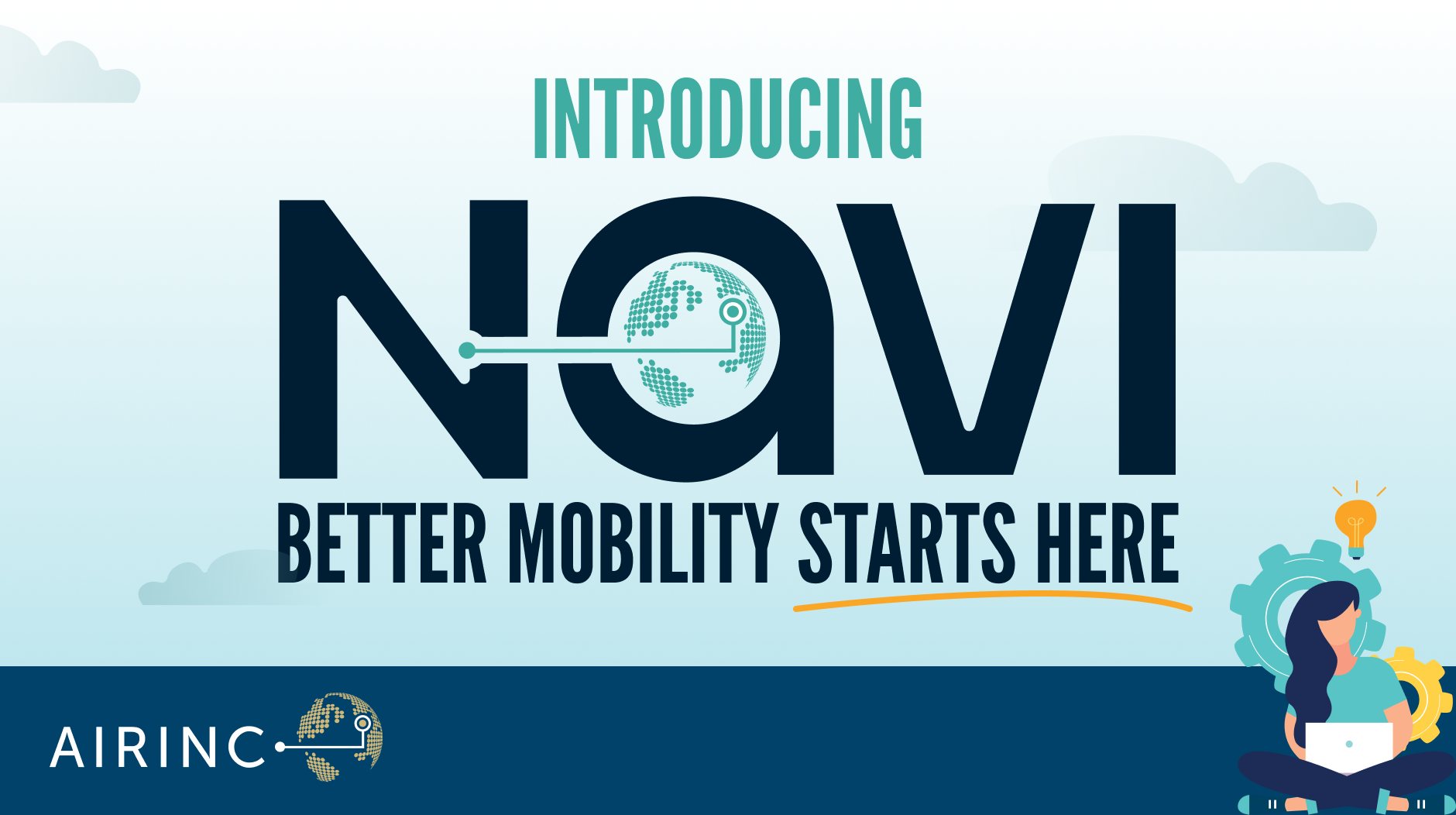
Navi is a technology platform built to help mobility teams make good decisions from Day One. As I started learning it, I kept having these little alarm-bell moments.
-
This would have helped.
-
That would have saved me hours.
-
I wouldn’t have had to scramble for that answer.
If my boss had asked me that same question while I was using Navi, I wouldn’t have needed two days and an inbox deep dive. I would have had the answer in minutes.
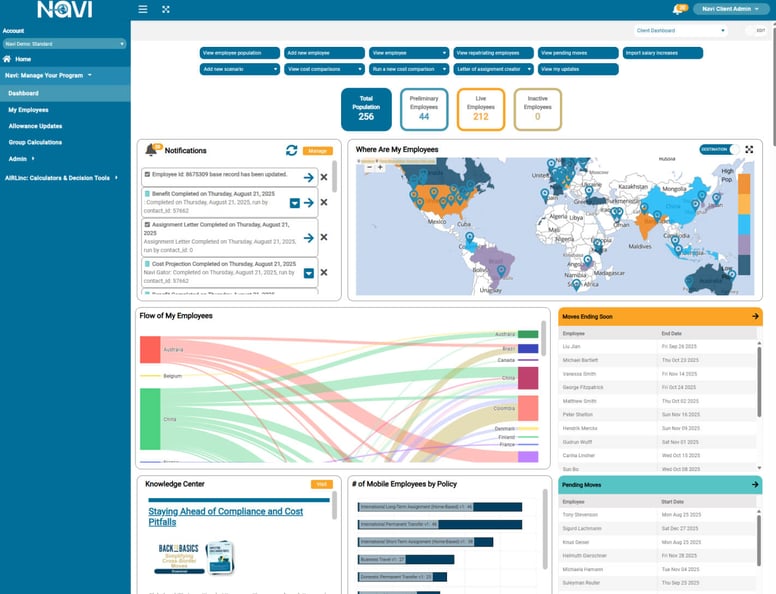
In Navi, every move lives in one place — from the moment it’s initiated, not just when it’s approved or completed. Every scenario. Every outcome.
-
The “maybe” moves are there.
-
The offer declines are there.
-
The immigration-only employees are there.
-
The tax-only employees are there.
They’re tracked automatically and consistently, so reporting reflects the full scope of work you actually do — not just the cases that cross the finish line.
Instead of relying on disconnected spreadsheets, inbox folders, and lists from multiple providers, you have a single source of truth for your entire mobility population — one that makes workload, volume, and impact visible without manual clean-up after the fact.
Why This Matters
I’m not here to hard-sell you.
But if you’re grappling with how to report on your workload, or struggling to quantify the value of your global mobility program, there is a better and more affordable solution than spreadsheets. One that gives you visibility into every case you touch, not just the ones that make it to completion.
For me, this story is really about credibility. I’ve lived the problem. I know what it’s like to be asked to prove your impact without the tools to do it easily. And I know how much difference the right technology can make.
If this resonates, take a few minutes to see how Navi works in practice — and what it looks like to have every case, every scenario, and every outcome accounted for. Proving your impact shouldn’t require detective work.

Navi, derived from Navigation, brings together the best of AIRINC’s data and technology in one seamless platform. With Navi, you get:
- Talent Planning: Scenario planning and cost estimates to make smarter, faster Mobility decisions for mobile talent.
- Streamlined Management: One platform to seamlessly manage your Global Mobility data, calculations, and reporting.
- A Solution Tailored to Your Needs: Flexible, scalable, and designed to fit your unique Mobility program.
- Empowered Decision-Making: Gain program-level visibility to make good decisions for your entire Mobility program.
- Your Data, Technology, and Advice Together: Consolidate vendors by partnering with experts in data, technology, tax, and Mobility best practices.
Whether you’re kicking off an assignment or managing ongoing updates, Navi simplifies the complex, supporting your program management and mobile talent decisions.

%20(1).png)
%20(1).png)